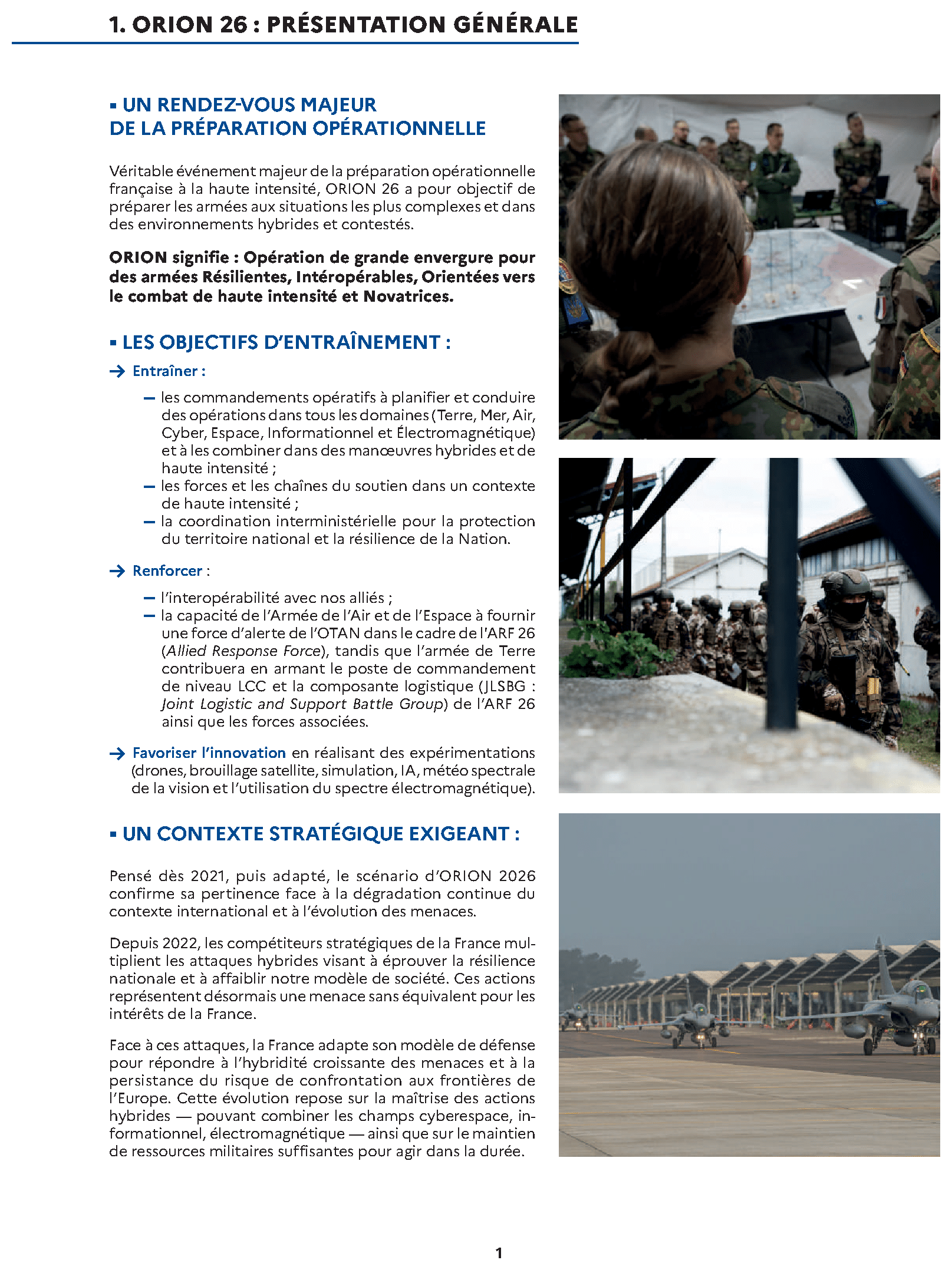
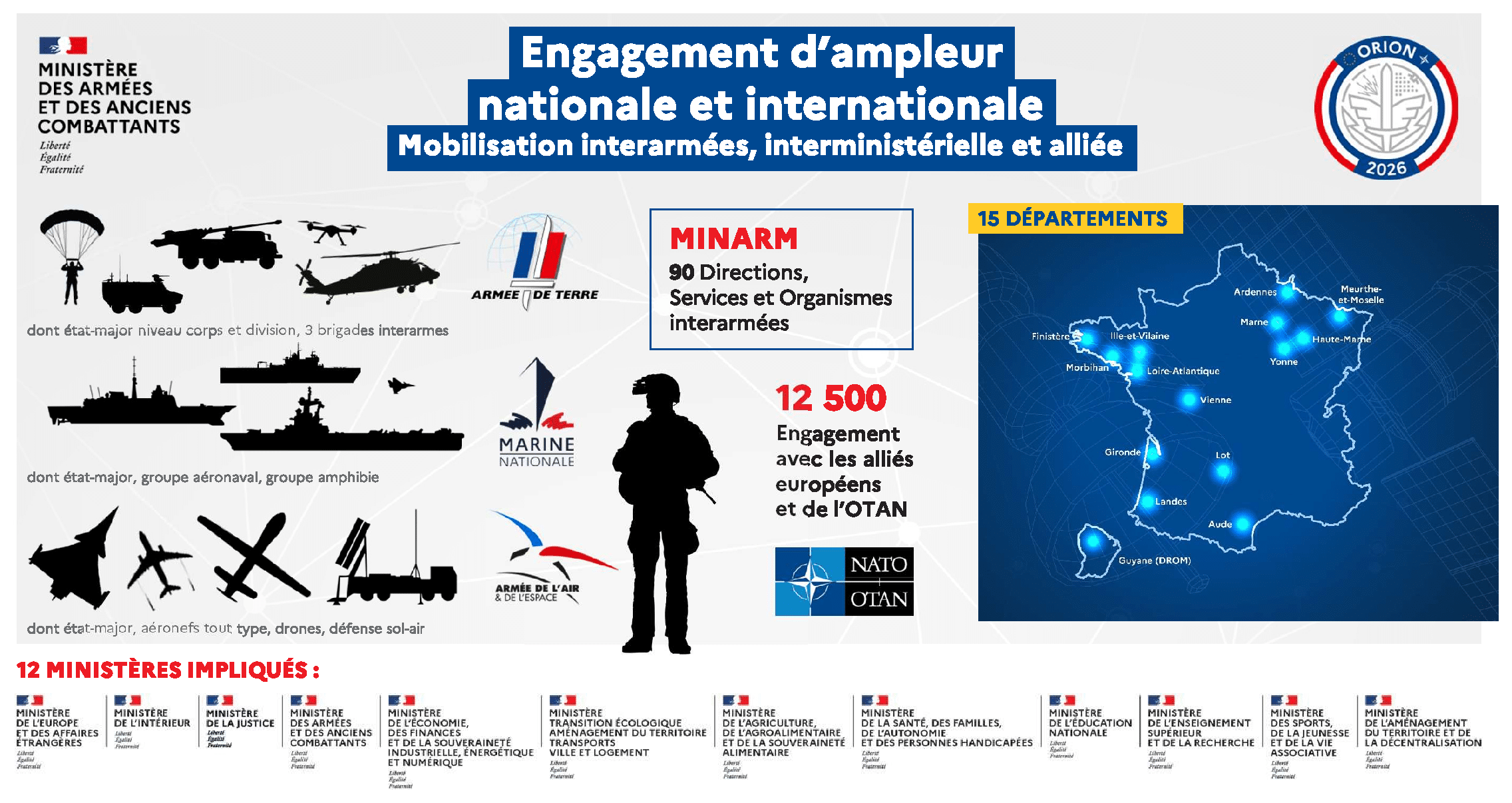
From February 8 to April 30, 2026, the French Armed Forces conducted ORION 26, the largest military exercise held by France since the end of the Cold War. This joint, combined, multi-domain operation brought together around 12,500 troops, 25 ships — including the nuclear-powered aircraft carrier Charles de Gaulle —, 140 aircraft and more than 1,200 drones, with forces from 24 allied nations operating across land, sea, air, cyber and space.
During the exercise, Drone AI Technology returned to the field with the 2e RIMa — the same unit we supported during POLARIS 25 — joining a two-day trials phase to deliver real-time area surveillance, tactical intelligence gathering and reconnaissance support.

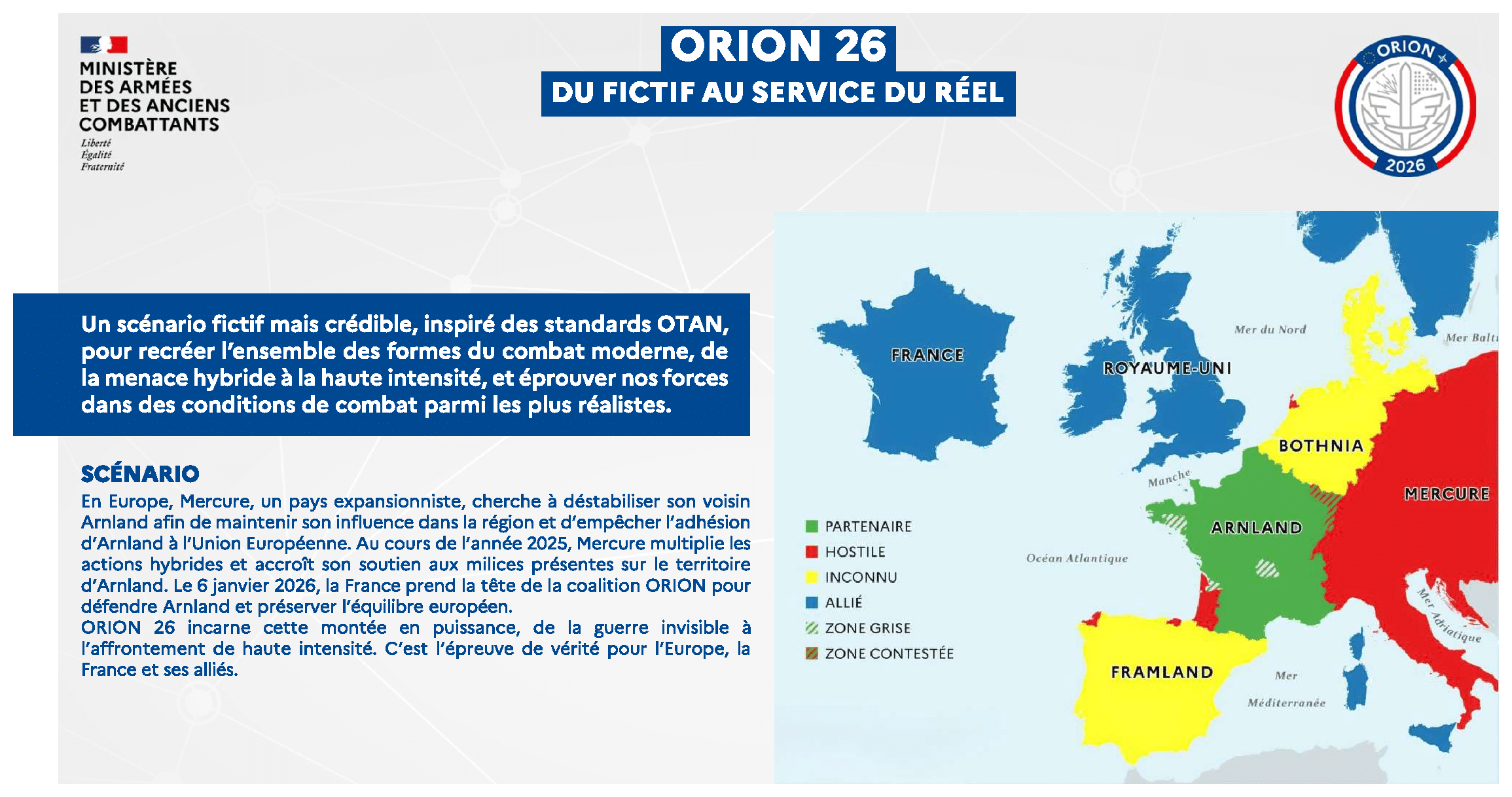
* Land forces completed these assets with troops, helicopters, logistics support, joint staff and ground-based air defence. The exercise was built around a fictional confrontation between the states of Arnland and Mercury, inspired by the return of state-on-state conflict to Europe. Source: Ministère des Armées et des Anciens combattants — ORION 26 press kit.
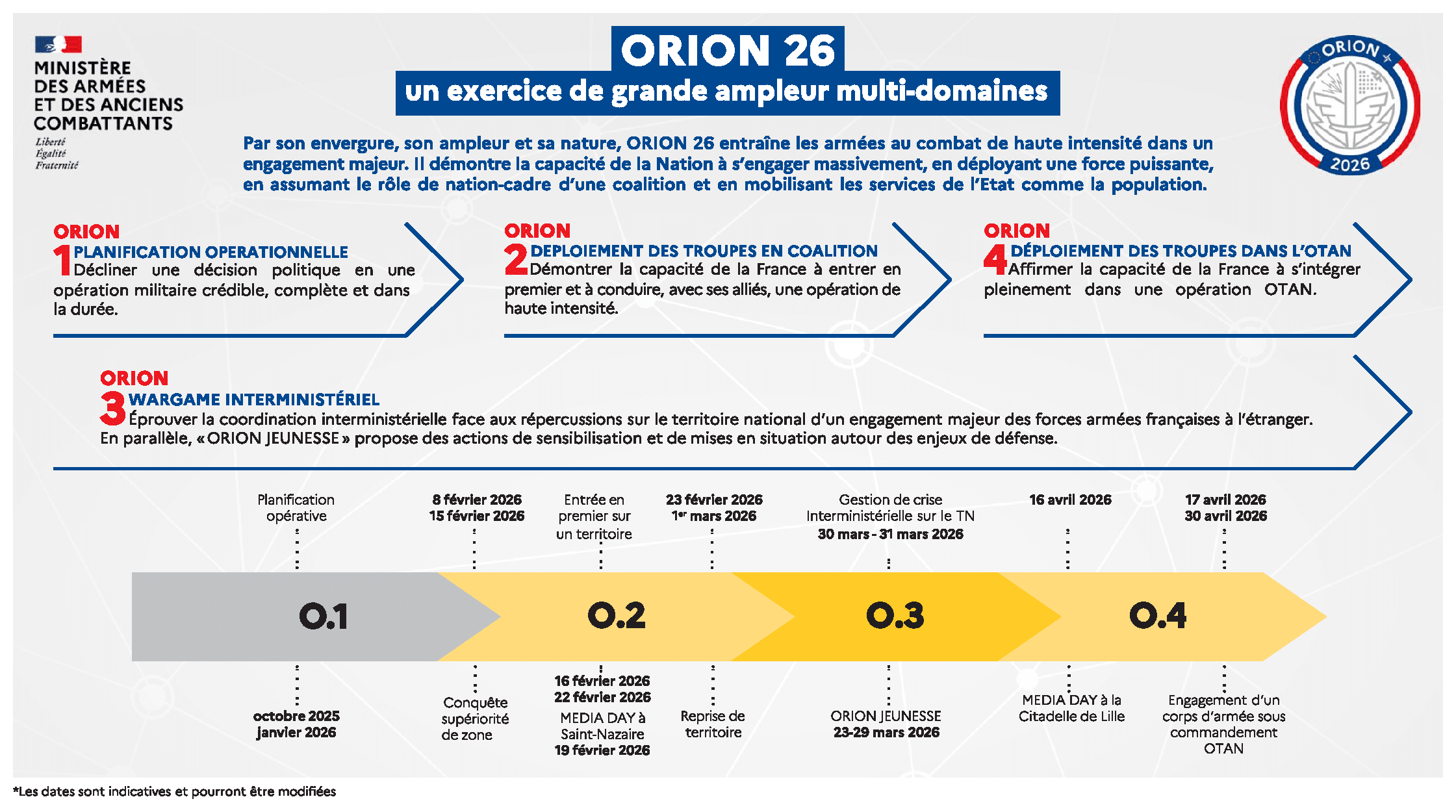
ORION 26 was structured into four interconnected phases, each designed to prepare French and allied forces for high-intensity warfare in a contested, multi-domain environment. Spanning almost three months, the exercise tested the full spectrum of France’s combat capabilities — on land, at sea, in the air, and in cyber and space.
The broader objectives of ORION 26 included:
Drone AI Technology participated directly in this environment, working alongside the 2e RIMa in a dedicated trials phase to support surveillance, reconnaissance and real-time intelligence workflows.
During Exercise ORION 26, Drone AI Technology rejoined the 2e Régiment d’Infanterie de Marine (2e RIMa) — the unit we supported throughout POLARIS 25 — for an intensive two-day trials phase. Our mission: to enhance situational awareness, deliver real-time reconnaissance, and support decision-making under the most demanding high-intensity conditions France has staged in decades.
Our latest AI models ran entirely on the edge — no central servers, no cloud dependency — providing real-time detection and classification of personnel and vehicles, persistent tracking of designated targets, and geo-referenced tactical intelligence placed instantly on a live common operating picture.
What set our contribution apart was, once again, the ability to process data at the edge and to dynamically adapt flight paths and detection parameters based on evolving mission inputs — this time in an airspace shared with hundreds of unmanned systems and under contested-spectrum conditions.
Two consecutive years, two large-scale exercises with the same unit: after POLARIS 25, the ORION 26 trials confirmed the reliability, mission flexibility and real-time intelligence value of the Drone AI platform under high-intensity warfare conditions.
